
A Sudoku page can look busy before anyone has written a single number. For a new player, the best way to learn how to introduce Sudoku blocks is not to explain every possible rule or solving trick. Start by helping them see the page as three simple blocks: rows, columns, and boxes. Once those groups feel familiar, Sudoku becomes a calm visual routine, not a test of math or complicated logic. See our blog
This is especially helpful when introducing Sudoku to older adults, hesitant beginners, or people who have tried it before and felt discouraged. There is no need to race, calculate, or remember a long list of instructions. A clear explanation, an easy puzzle, and a little time to look are enough.
What Sudoku Blocks Actually Are
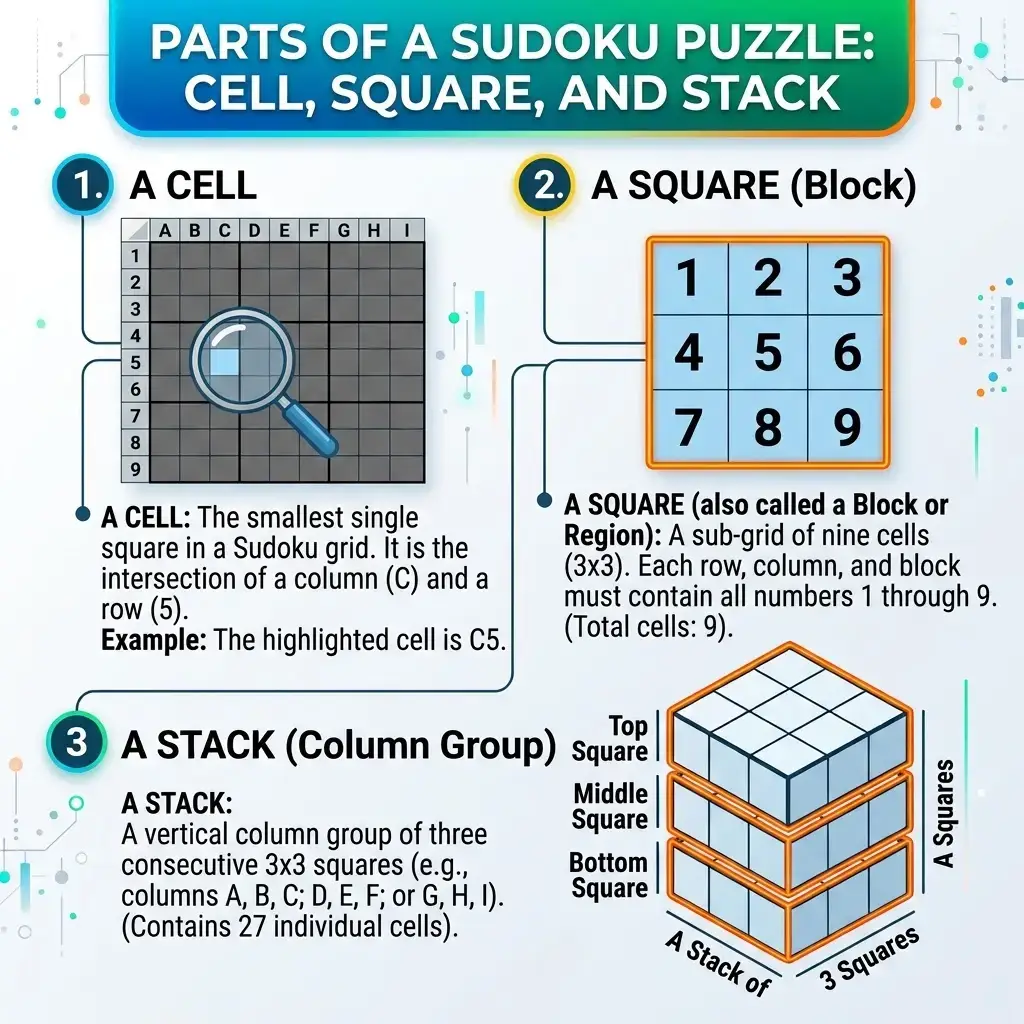
Every classic Sudoku puzzle has 81 small cells arranged in a larger 9 by 9 grid. The squares belong to three overlapping Blocks. A horizontal stack of three, and a vertical stack of three. Each larger 3 by 3 section is a Block.
The same simple rule applies to every group: use the numbers 1 through 9 once each. A number cannot be repeated in the same row, column, or box.
That is the whole foundation. It may sound like a lot when said quickly, so introduce one group at a time. Point to a row and let the person follow it with a finger from left to right. Then point to a column and trace it from top to bottom. Finally, outline a box with a finger and show its nine smaller squares.
Avoid presenting rows, columns, and boxes as technical vocabulary that must be memorized. They are simply places to look. A player does not need special powers of logic to recognise a straight line or a small square section.
How to Introduce Sudoku Groups Step by Step
Begin with a printed easy puzzle or an uncluttered screen. A tablet is ideal. Before asking someone to solve anything, invite them to notice the thicker lines. Those lines divide the puzzle into nine squares. This gives the eye a comfortable starting point.
Next, choose one square (of nine cells) and ask which numbers are already there. Do not ask for the answer yet. The purpose is observation. If the box contains 1, 2, 4, 6, and 8, the missing numbers are 3, 5, 7, and 9. This is not mathematics. It is simply noticing which symbols have not appeared in that small group.
Then show how one empty square belongs to all three groups at once. It sits in a row, a column, and a box. That one idea explains why Sudoku works. When a player checks the row, column, and box around an empty square, they can see which numbers are already used and which ones remain possible.
Keep the language gentle and repeatable: look across, look down, and look in the box. For many beginners, that phrase is easier to remember than a detailed explanation of puzzle theory.
It also helps to pause after each step. A confident player may want to move on quickly, but a new player benefits from time to find each group independently. Let them point to another row, another column, and another box. Recognition comes before solving.
Use one square as the teaching point
A common mistake is trying to explain the whole grid at once. Instead, choose a single empty square with several nearby numbers already filled in. Ask the player to look across its row first. Which numbers are already present? Then look down its column. Finally, check its box.
If only one number is missing from the three checks, it can be placed. This is often called a sole candidate, but beginners do not need the label immediately. They only need to experience the satisfying moment when a square has one clear answer.
If more than one number could fit, that is fine. Move on. Sudoku is not about forcing every square straight away. It is about calmly scanning, noticing, and returning when more information appears.
Why an Easy Puzzle Is the Right Place to Start
A harder puzzle is not a better introduction. It can hide the simple structure of rows, columns, and boxes behind too many empty squares. An easy standard puzzle gives new players enough filled numbers to practice looking without feeling stuck.
This matters for anyone returning to Sudoku after a frustrating experience. Traditional methods may encourage checking number 1 throughout the grid, then number 2, then number 3, in sequence. That routine can feel repetitive and confusing and is entirely wrong. If someone has learned it before, give them permission to set it aside for now.
At Sudoku123, the 1-2-3 routine uses a more relaxed random scanning approach. Rather than working through numbers in order, players scan the groups in front of them and respond to what they can see. The goal is not speed. The goal is a simple, repeatable habit that makes an easy puzzle feel achievable.
For a first session, aim for understanding rather than completion. Solving even a few squares correctly is a meaningful start. A completed easy puzzle can come later, once the person sees that every answer is found by looking at familiar groups.
Make the Introduction Feel Comfortable, Not Corrective
The words used around Sudoku matter. Avoid saying that a player should already know the rules or that a missed number is an error. Try phrases such as “Let us check that group again” or “There may be another square that is easier to see first”.
This approach protects confidence. Some people worry that Sudoku reveals whether they are good with numbers. It does not. Sudoku uses numbers as symbols, much like letters or colors. The task is to notice what is present and what is missing within each group.
A quiet setting can help, particularly for a daily brain exercise. Sit comfortably, keep the puzzle well lit, and have a pencil ready. There is no prize for finishing in a certain number of minutes. A short, pleasant session is more likely to become a regular routine than an intense one.
If pencil notes are introduced, keep them simple. Notes are small reminders of possible numbers, not another layer of pressure. For beginners, limiting notes to two-cell and three-cell placements keeps the page readable and the routine manageable. When notes begin to clutter the grid, it is usually better to return to scanning rows, columns, and boxes.
Helpful Questions to Ask a New Player
A supportive guide does not need to provide answers. Questions can direct attention while allowing the player to make the discovery. Ask, Which numbers are missing from this box? Which of those numbers can already be seen in the row? What about the column?
When a number cannot go into a square, ask where it is already appearing. This shifts the focus away from guessing. A player learns that each group gives useful information, even when it does not produce an immediate answer.
If the person becomes tired or uncertain, stop there. It depends on the individual whether a five-minute introduction or a longer practice session feels best. The aim is to leave them curious and capable, not overloaded with rules.
Turn Group-Spotting Into a Gentle Daily Habit
Once rows, columns, and squares are familiar, a small Sudoku routine can fit naturally into a quiet part of the day. Some people enjoy a few minutes with morning coffee. Others prefer an afternoon break or a calm activity before bed. Consistency is more valuable than trying to solve a great deal at once.
Sudoku can support focus, observation, and the satisfaction of completing a structured task. It is a recreational mental activity, not medical treatment or a guarantee of cognitive improvement. Anyone with concerns about memory or health should speak with a qualified health professional.
The reassuring part is that every easy Sudoku begins with the same three groups. Look across the row, look down the column, and look in the box. With a pencil, an easy puzzle, and a little patience, those groups soon become familiar places to look.
Check out our Free website or our BLOG PAGES for further information and tips and tricks.