
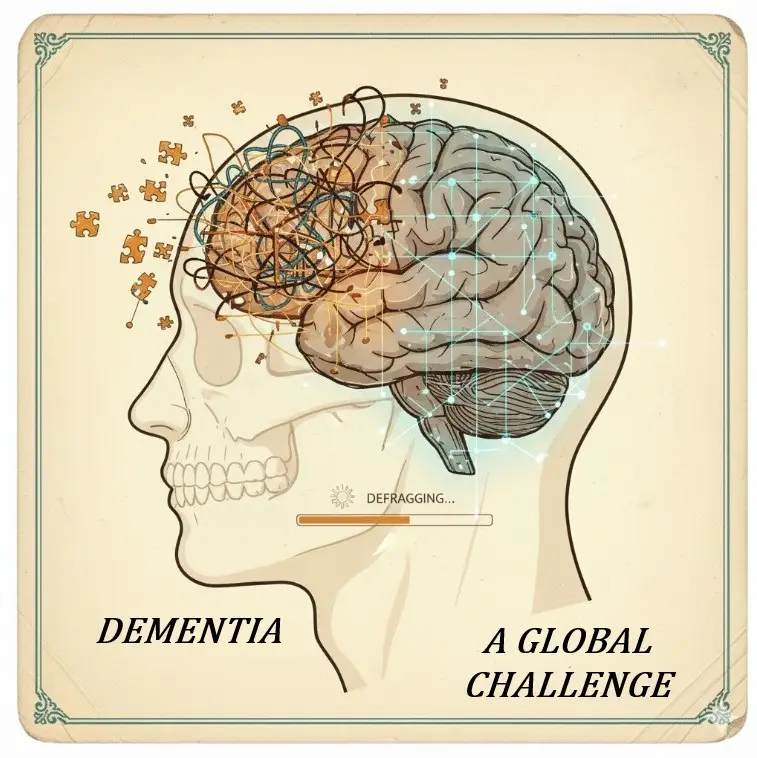
The Statistics at a Glance
USA (No. 6 Leading Cause of Death): An estimated 7.4 million Americans aged 65 and older are living with clinical Alzheimer’s dementia (roughly 1 in 9 adults in that age group). Without major medical breakthroughs, this is projected to reach 13.8 million by 2060. Annual health and caregiving costs exceed $850 billion.
UK (No. 1 Leading Cause of Death): Over 982,000 people live with dementia across the UK. In England and Wales, dementia and Alzheimer’s represent the single leading cause of death, accounting for 12.7% of all registered deaths (over 72,000 annually). Annual economic impact: £42.5 billion.
Canada (No. 6 Leading Cause of Death): Approximately 772,000 Canadians live with dementia, with over 414 new cases diagnosed daily. Driven by an aging demographic, this figure is projected to reach 1.7 million by 2050.
Australia (No. 1 Leading Cause of Death): Between 446,500 and 459,000 Australians live with dementia. It is the leading cause of death overall (and the leading cause of death for Australian women). Cases are projected to exceed 1 million by 2065.
“Use It or Lose It” in the Age of AI
The human brain remains the most complex- and least understood – organ in the body. The primary factor associated with dementia is increasing age, alongside non-modifiable genetic factors and manageable lifestyle, vascular, and cognitive health choices. As modern medicine extends life expectancy, our cumulative risk of cognitive decline increases accordingly.
The key takeaway from the data is manageable lifestyle and cognitive health factors.
In an era marked by automated labor and the rapid rise of Artificial Intelligence (AI), we face a subtle new challenge: less operational need to actively calculate, problem-solve, or reason for ourselves in daily life. Without intentional effort, our bodies get less physical exercise, and our brains receive less sustained neurological stimulation during our later years.
To be clear, genetics, family history, vascular health, and lifestyle habits all play their part. However, research consistently highlights the value of Cognitive Reserve— the brain’s capacity to improvise and find alternate neural pathways. Lifelong, active engagement in novel mental activities (such as complex problem solving, structured reading, or learning new skills) builds this reserve, helping the brain build resilience against neurological damage.
The Neurochemical Synergy: Dopamine and Endorphins
A healthy lifestyle requires exercising both body and mind, alongside quality sleep. But where do structured number puzzles like Sudoku fit into this picture?
While research continues to explore specific puzzle-dementia links, any activity that engages cognitive reserve while stimulating the natural release of dopamine and endorphins offers clear cognitive benefits.
Neurobiologists recognise that these chemical messengers support neuroplasticity – the brain’s ability to reorganise itself and build new neural connections: Dopamine provides the spark of drive, focus, and curiosity. Spotting a pattern or placing a correct number triggers a natural dopamine surge, encouraging the brain to stay engaged. Endorphins buffer stress, calm central nervous system anxiety, and produce a sense of satisfaction and ease.
When activated together through low-stress, engaging problem-solving, they create an optimal neurochemical environment for brain health. Combined with gentle exercise, social connection, and a balanced diet, stimulating brain exercises help keep our minds working better for longer.
Rethinking the Puzzle: The Sudoku123 Approach
For a daily brain exercise to be sustainable, it must be stress-free, relaxing, and pleasurable – capable of a satisfying conclusion that leaves you wanting to return for more.
Traditional Sudoku often turns people away with cluttered pencil marks and frustrating dead ends. Common responses include: “Sudoku? I tried that, but I couldn’t figure it out.” ” I don’t do puzzles that rely on heavy math, logic, or complex calculations.” Sudoku123 was redesigned to eliminate those friction points. By replacing chaotic guesswork with a clean, low-stress scanning method, solvers achieve the pleasure of pattern recognition without the cognitive exhaustion. Successful completion provides a satisfying mental reward – and the desire to return for another dose of low-stress brain training.
A Personal Reflection
When I started on this journey, my original goal was simply to supplement a low physical exercise routine. Over time, however, the process transformed how I engage with daily challenges. Using the Sudoku123 method trained my brain to stay alert, calm, and observant. I now find renewed pleasure in solving challenging puzzles, and that heightened awareness carries over into daily life – helping me notice and take pleasure in what the world has to offer. That can be your goal in later life, too. If you want to solve harder puzzles with confidence, you simply start with an easy grid and build the habit. A few simple tips and tricks from our guides will get you on your way. Take a look here: Tips & Tricks
Why not give your brain the exercise it deserves? What do you have to lose?
Disclaimer: This article reflects personal experiences, research observations, and common-sense health strategies. It does not constitute medical or neurological advice.
How to Make Sudoku a Supportive Habit
Keep the starting point easy. Choose a standard easy 9 by 9 puzzle and give yourself permission to work slowly. If a session lasts ten minutes, that is enough. If you finish a full puzzle in around 15 minutes, enjoy that accomplishment. If you stop halfway through and return later, the puzzle will still be there.
It can help to make the activity part of an existing routine. Place it beside your morning drink, use it as an afternoon reset, or set aside a few minutes after dinner. Regularity matters more than duration. A pleasant habit is one you can repeat without dread.
Notice how you feel afterwards, but do not demand a dramatic result. Some days you may feel especially clear and engaged. On other days, the benefit may simply be that you spent a little time concentrating on something kind, orderly, and achievable. Both experiences count.
Choose one easy puzzle, take a slow look at any row, column, and box, and let the next small opening guide you. A calm mind does not need to race to make progress.